Think every Reston home competes in the same market? A two-minute drive can change buyer demand, pricing power, and days on market. If you are comparing listings across lakes, Town Center, North Point, and South Lakes, it pays to zoom in. You want the right comps, the right expectations, and the right strategy for your block, not just your ZIP code.
In this guide, you will learn how Reston’s micro-markets work, why prices vary by area, and how to read local comps with confidence. You will also get a simple checklist you can use before you price, list, or make an offer. Let’s dive in.
Reston micro-markets explained
Reston is a planned community with distinct villages, lakes, and centers. Each pocket has its own mix of housing types, amenities, and buyer pools. To orient yourself, study the official village and amenity resources from the Reston Association. These maps help you compare like with like.
A few broad areas tend to anchor pricing patterns. Boundaries are not rigid, and there are pockets within pockets. A townhouse one block from Town Center often behaves like an urban product, while a similar townhouse two miles south may trade more like a suburban home. Keep that nuance in mind as you read on.
Where prices diverge in Reston
Lake communities
Lake Anne, Lake Thoreau, Lake Audubon, and nearby clusters offer condos, townhomes, and single-family homes. Many properties market water views, shoreline access, or easy trail connections. Scarce features like true lakefront or long water views can drive a premium because they are limited and highly valued. Proximity to village centers and community amenities also matters here.
Town Center adjacent
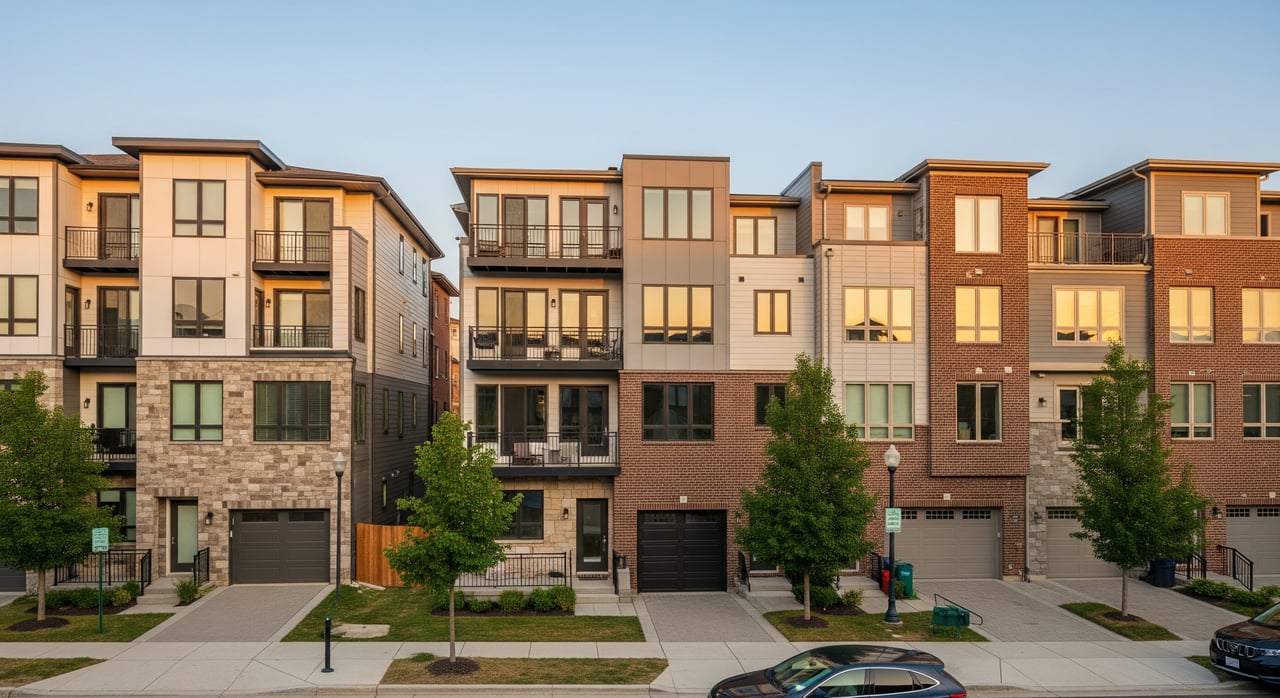
Around Reston Town Center you will find mid and high-rise condos, newer urban-style apartments, and some townhomes and infill single-family homes near the edges. Walkability, restaurants, and access to the Silver Line appeal to commuters and professionals. Units within an easy walk to retail and transit often attract a different buyer pool than similar-size homes farther out.
North Point / North Reston
North Point mixes single-family homes, townhomes, and garden or mid-rise condos. Lots can feel a bit more suburban in parts of North Reston, with varied walkability to retail and parks. Access to the Dulles Corridor and nearby employment centers is a draw for many buyers in this area.
South Lakes and Hunters Woods
South Reston offers established single-family neighborhoods, townhomes, and garden-style condos. Some pockets have larger suburban lots and a calmer street feel. Many households in this area focus on recreation, pools, parks, and local schools, which can shape demand among family buyers.
Why prices differ within short distances
Transit and commute access
Proximity to Silver Line stations and major roads matters. Homes within an easy walk or short drive to Wiehle–Reston East or the Town Center station often see stronger commuter demand. For station locations and service details, review the WMATA Silver Line stations.
Housing type and product mix
Condos near Town Center, townhomes in clustered neighborhoods, and detached homes with larger lots trade on different terms. Price per square foot varies by product, and so does sensitivity to HOA or condo requirements. Compare within the same property type before you cross-compare types.
Amenities, views, and open space
Lakefront, lake-view, and trail-side homes are limited in supply. That scarcity shows up in pricing. Access to pools, playgrounds, and village centers also influences what buyers are willing to pay, especially for active households.
School boundaries and local services
Fairfax County Public Schools assignments can affect search patterns for many family buyers. If you are weighing school boundary questions, verify current attendance zones using FCPS attendance boundaries. Local services and taxes are generally consistent across Reston because it is within Fairfax County.
Age, condition, and renovations
Reston has many homes from the 1960s through the 1980s, plus newer infill. Renovated kitchens, baths, roofs, windows, and systems can shift value meaningfully versus original condition. Buyers often adjust their offers to reflect expected upgrade costs and timelines.
Lot size, privacy, and openness
Two homes with similar interior square footage can trade differently if one has a larger lot, more tree cover, or better privacy. Orientation and outdoor usability often show up in buyer willingness to pay.
HOA and condo fee structures
Monthly fees affect total cost of ownership. What fees include matters, such as insurance, water, amenities, and reserves. Higher fees can reduce the budget available for price, which shows up as lower price per square foot for otherwise similar units. Always verify details with current HOA or condo documents.
Supply, demand, and inventory
Some areas rarely hit the market, such as certain lakefront segments. Low turnover can lead to competitive offer dynamics when listings do appear. Buildings or clusters with higher investor shares may see more frequent turnover and different negotiation patterns.
How similar homes sell for different prices
You will see price gaps for homes that look similar on paper. Here are common reasons:
- Location premium. A renovated condo in a high-rise steps from Town Center retail and transit can trade differently than a same-size garden unit near a lake with limited parking and higher monthly fees. The buyer pools and value drivers differ.
- Product adjustment. A townhouse with fee-simple lot ownership and a private patio is not a one-to-one comp with a condo of similar interior size. Lot rights, privacy, and HOA coverage change value.
- Renovation adjustment. A move-in-ready kitchen and updated baths often command a meaningful premium over original finishes. Buyers discount for time and cost.
- Orientation and view. Water views, wooded buffers, and interior courtyard locations can add value beyond raw square footage.
- Functional differences. Full bathrooms, dedicated parking or a garage, a finished basement, and permitted additions often reset the price range.
- Marketing and timing. A well-staged, well-priced listing targeted to the likely buyer pool tends to secure stronger terms. Overpricing can push days on market up and invite concessions.
Compare true comps with a micro-market checklist
Use this step-by-step process to keep your analysis tight:
- Define the micro-market
- Draw a small radius or pick a named cluster, village, or building. Start with Reston Association maps to set logical boundaries.
- Note proximity to Silver Line stations, lake access points, village centers, and major roads.
- Match property type and size
- Keep condos with condos, townhomes with townhomes, and detached with detached.
- Align bedroom count, finished square footage, parking type, and outdoor space.
- Normalize for condition
- Separate renovated, partially updated, and original-condition comps.
- Record visible updates: kitchens, baths, systems, windows, roof, deck or patio.
- Adjust for view and orientation
- Flag lake or long water views, wooded buffers, interior court settings, and road exposure.
- Consider privacy, light, and noise.
- Account for HOA or condo fees
- List monthly fees and what they include. Identify recent or pending special assessments.
- Compare net monthly cost, not just list price.
- Check recent activity and velocity
- Track median days on market and list-to-sale price ratio within your micro-market.
- Watch for seasonal patterns and new listings in the past 30 to 90 days.
- Confirm external factors
- Verify school boundaries with FCPS if relevant to your search.
- Note nearby development or planned changes that could shift demand.
What to track for each area
Focus on a consistent time frame, such as the last 12 months, then compare across areas:
- Core pricing metrics. Median and mean sale price, price per square foot by property type, list-to-sale price ratio, and median days on market.
- Inventory and absorption. Number of closed, active, and pending listings, plus months of inventory.
- Composition. Mix of condos, townhomes, and detached homes, typical bedroom counts, and rough condition distribution.
- Cost of ownership. HOA or condo fee ranges and inclusions, plus county tax rate context via the Fairfax County Real Estate Assessment.
- Non-price indicators. Walkability to amenities, transit proximity, and commute patterns.
For data and reporting, use Bright MLS for parcel-level comps and filters, and consult NVAR market reports for regional context. For station details and transit planning, use WMATA. For property records, parcel lines, and assessments, use Fairfax County. For maps and amenities, rely on the Reston Association.
Seller strategy: price to the pocket
- Choose comps from the same village or amenity band. If you have a lake view, prioritize other lake-view sales first. If you are walkable to Town Center, pull comps with similar walkability.
- Lead with transparency on fees. Disclose HOA or condo fees, what they include, and any recent or pending assessments. Buyers calculate total monthly cost.
- Prep and present to the right buyer. Stage and photograph to highlight what your pocket’s buyers value most, such as water views, walkability, or outdoor space.
- Set a micro-market price range. Avoid broad Reston averages. Right-pricing often attracts stronger early offers and reduces days on market.
Buyer strategy: compare beyond list price
- Calculate total monthly cost. Include mortgage, taxes, HOA or condo fees, and utilities where applicable. A lower list price with higher fees can cost more per month.
- Adjust for commute and lifestyle. Put a value on walking time to transit, parking availability, amenity access, and the quality of outdoor space you will actually use.
- Weigh renovation costs and timing. Price an older kitchen or bath realistically, and factor contractor timelines into your offer.
- Respect scarcity. If you want a true lakefront or a specific cluster near transit, plan for limited inventory and be ready with strong terms when the right home appears.
The bottom line on Reston micro-markets
Reston is a collection of micro-markets, not a single market. Short distances can change buyer demand, pricing, and negotiation dynamics. If you price or offer based on broad stats, you risk missing value on either side. When you compare within tight boundaries, align property types, and account for fees, condition, and views, you make better decisions.
If you want a data-backed read on your specific pocket, start with a local, micro-market valuation. Get guidance that reflects Reston’s villages, lakes, transit access, and HOA realities. Get a free home valuation with Jeff Major Homes.
FAQs
What is a micro-market in Reston real estate?
- A micro-market is a small, defined area such as a specific lake cluster, Town Center–adjacent block, or village where similar homes compete with the same buyer pool and amenities.
How does the Silver Line affect Reston home prices?
- Homes closer to Silver Line stations often attract commuter demand and can trade at a premium versus similar homes farther from transit, especially for condos and townhomes.
Do lakefront or lake-view homes in Reston sell for more?
- Lakefront and true lake-view properties are scarce, and that limited supply often supports higher pricing compared with non-lake units of similar size and condition.
How should I compare HOA and condo fees across Reston?
- Look at monthly fee amounts and what they include, such as insurance, water, amenities, and reserves; compare total monthly cost alongside price per square foot.
Which data sources should I use for Reston comps?
- Use Bright MLS for closed and active listings, NVAR for regional trends, Reston Association for amenity maps, WMATA for transit context, and Fairfax County for tax and parcel data.